
“The book was #1 in Human Sexuality on Amazon for two weeks, yet it didn’t lead to overwhelming sales.” –Sandy Camillo
Be Relatable
An interview with Sandy Camillo
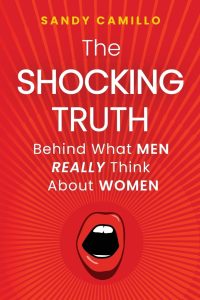 When I read the title of Sandy Camillo’s new book, The Shocking Truth: What Men Really Think About Women, I was immediately intrigued. Her observations are based on the responses to questionnaires, and she writes with frankness tempered with dry humor. She’s gained lots of wisdom in her many jobs, and this interview will answer many questions for you.
BLG: What did you study writing and when were you first published?
SC: When I was a young girl, women were encouraged to be one of 3 things–teacher, secretary, or nurse. I wanted to be Lois Lane, an intrepid reporter. I majored in English and became a school principal, paralegal, receivership specialist, realtor, court-appointed special advocate, and legal compliance and governance specialist, but never gave up my dream of writing. I started writing for newspapers and magazines about 20 years ago, and my first book, The Journey of an Invisible Woman, was published in 2022.
BLG: Wow! What a background. You have an intriguing title. Where did the idea for this book come from?
SC: For years, I’ve had conversations with men, including my husband and three sons, in which I would ask them honest questions and quietly wonder if I was really hearing the truth or if these men were filtering their thoughts in fear of retaliation or censure from the women in their lives.
At the same time, my work as a women’s advocate makes me realize that if we hope to improve the relationship between men and women, it’s important to discover what’s often left unsaid in their communications.
Some of the responses in the survey may surprise or even shock readers, but these answers are the truth, and that is where the title The Shocking Truth comes from.
BLG: There’s an enormous amount of research in this book. How did you formulate your questions and find the people you interviewed?
SC: The questions were based on the recurring themes that I observed in real-life experiences between men and women. I wanted men to feel completely free to tell the truth, so I used an anonymous SurveyMonkey survey. I didn’t pick the participants but made it clear that I wanted a cross-section of men of different ages, backgrounds, nationalities, and social, economic, and educational experiences. Women were also included in the same survey and asked to respond as they believed men would. The women’s responses were sometimes caustic or funny.
BLG: How did you pick the many historical situations you discussed, and did you have help with your research?
SC: For each question, I spent many hours searching through historical accounts to identify examples of behavior that aligned with the themes explored in the survey. While circumstances and contexts may have differed over time, many core male attitudes were consistent. Cultural influences did, however, affect how these attitudes were expressed.
My research was conducted independently, which allowed me to stay closely connected to every aspect of my work. I enjoyed looking back on the past because I was constantly learning new things.
BLG: What tips can you give to people doing research for a non-fiction book or article?
SC: The best advice that I can give is to thoroughly verify all sources of your information. You can’t rely on just one citation, as any one source can be inaccurate and non-fiction above all else, must be factually sound. Non-fiction can be a little dry for some people, so I would suggest adding a bit of color to your book. I created three fictional men at the beginning of each chapter to provide a narrative element and keep the reader engaged.
BLG: The tone in your introduction and your chapter titles will draw readers in. How did you achieve this tone?
SC: I wanted the book to be relatable and to speak to recognizable real-life situations. The chapter titles were designed to intrigue the reader with a touch of provocation and humor. I didn’t want the book to read like an academic treatise, as that might be off-putting to some readers. I wanted the important truths revealed in the book to be accessible to a wider audience.
BLG: How did you find Koehler books and how have they helped you market your book?
SC: I did many online searches to find a small press with good reviews, a reputation for quality books, and a dynamic staff. Koehler met this criterion. In addition, they provided guidance with a marketing manual and personalized assistance.
BLG: That was my experience with them as well. What’s the best marketing tip you can give to writers who are new to the business side of writing?
SC: The most difficult thing for me was not writing my books but trying to market them effectively. I create TikTok videos and post weekly blog posts on my website and social platforms. I’ve appeared on podcasts promoting my book, reached out to influencers, and presented it in special promotions.
The book was #1 in Human Sexuality on Amazon for two weeks, yet it didn’t lead to overwhelming sales. Unless you have a vast personal network or a well-known name, I would definitely recommend hiring a marketing specialist if you can find one at a reasonable price.
BLG: What else would you like us to know and where can we learn more about you?
SC: My third book, tentatively titled What If, Real Choices in Unreal Moments, is being published by Koehler Books, with a publication date of November 10, 2026. What if explores the gap between what we believe and what we actually do. It puts you inside the moment where morality becomes dangerous, and there are no right answers, only consequences. I also write a blog on ageism on X, and relationship blogs on my website sandycamillo.com.
This July, I will become President of the American Association of University Women of New York State, AAUWNYS. In this capacity, I’ll be able to listen to the voices of many women as they tell their life stories. It might make for an interesting fourth book.
BLG: Thanks so much for sharing your thoughts with us. I hope you’ll pick up a copy of the book.
@@@
Ideas and tips for writing Flash Fiction.
“I believe a compelling flash story works best when it uses compression, narrative, language, imagery, details specific to its story and character(s) that aren’t interchangeable with others, and rhythm.” ~~Andrea Marcusa
The Form Intrigued Me
An Interview with writer Andrea Marcusa
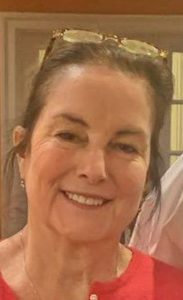
Andrea Marcusa began her career as a writer for Glamour and Mademoiselle magazines where, fresh out of college, she received her first national byline for a personal essay chronicling the ups and downs of a long distance romance. She’s written about falling in love, marriage, motherhood, siblings, parents, and learning to drive a pickup truck. Her work has appeared in national newspapers including The New York Times, The Christian Science Monitor as well as Glamour and Mademoiselle magazines.
Her literary fiction and essays have appeared in The Gettysburg Review, River Styx, Citron Review, The Baltimore Review, and others. She’s received recognition for her writing in a range of competitions, including Glimmer Train, Third Coast, The Raleigh Review, Southampton Review (fiction) , New Letters (essay) and Citron Review (micro fiction). Since 2014, she has been nominated yearly for Pushcart Prizes.
Here are her ideas and tips for writing Flash Fiction.
BLG: Tell us about your writing background. When did you know you wanted to be a writer and when were you first published?
AM: I wrote my first story in the first grade about neighborhood dogs howling all night long and keeping me awake. My teacher loved the story and from there, my writing took off . I read books, told stories and wrote them. In college I wrote for our newspaper and when I graduated, I landed a job at the now defunct Mademoiselle Magazine, in New York City, where I received my first byline for a personal essay about a long-distance romance.
After Mademoiselle, I worked for several magazines, including Glamour where I was a staff writer. Within a few years, I wanted to expand my skills and bank account and so began working in marketing communications, where I wrote ad copy, press releases, speeches, and annual reports in a range of fields from fashion to food to health to medicine. During this time, I constantly felt pulled towards more creative writing and at some point began taking evening workshops in New York City for personal essays and memoir.
Soon I was publishing my essays in the New York Times, the Christian Science Monitor, Long Island’s newspaper, Newsday and others. At some point, I expanded beyond CNF into fictional narratives and began writing short stories.
BLG: How did you develop an interest in flash fiction?
AM: After several years, publishing long stories in some highly respected literary magazines, I discovered flash fiction. The form intrigued me. How a fine flash could leave a reader deeply emotionally moved. I was amazed that it could be achieved with so few words. Although I had written stories up to twenty-five pages long, I’ve always preferred the short form. Most of my professional writing career had been writing short pieces, from fashion copy to brief bios, to captions to press releases and I was comfortable writing clear and concise work that covered lots of ground. Plus, I felt the public’s reading tastes were moving in this direction too, so I immersed myself in Flash Fiction.
BLG: Why does it seem particularly appropriate for our times?
AM: We are constantly being pulled in many directions as we are bombarded with messages — on elevators, at bus stops, social media, even news stories. Lots has been reported about the publics decreasing attention span. Therefore flash fiction is a perfect literary form for our times.
BLG: What makes a flash fiction story work?
AM: That is a difficult question to answer. I believe a compelling flash story works best when it uses compression, narrative, language, imagery, details specific to its story and character(s) that aren’t interchangeable with others, and rhythm. The emotional tone of the story must move. We must feel that the story does not end on the same emotional note that it began with.
BLG: How do you come up with such good endings?
AM: Thank you for saying that I came up with good endings! Most of my best endings either bubble up sort of unconsciously while I’m writing, or when I’ve finished a story, and not happy with the ending, I may be taking a walk and a new ending will appear in my mind like a lightning flash. I don’t think through the endings I allow them to show up from clues in the writing — an image, a sound, a rhythm.
BLG: How do you market flash fiction?
AM: I don’t consider myself a great marketer. I read flash collections and novels in flash and flash publications constantly. If the work of a writer reminds me of mine, I look to see where else they have been published and make note of these publications. I also look at the “best of” annual collections for ideas. Then I look up each publication that I’m interested in, read a few issues, and if they seem like a good fit, I’ll send out a piece. I don’t believe in trying to write for a specific publication. For instance, I will never be a funny writer, so I would never try to write for a publication interested in humor. The same for magical realism or surrealism.
BLG: How did you find Bottlecap Press?
AM: I was very new to the book publishing process. I went to many online readings and collected flash books from authors I respected and created a list of targets. Then I sent my manuscript to the ones that made sense. Bottlecap was the first publication that responded, in fact, quite quickly. I asked several writers whose opinions I respect and who had published flash collections and they said they thought it was a good publisher. So I went with it.
BLG: What advice do you have for those struggling to improve their flash fiction?
AM: Read flash. Take workshops. Map out what an author is doing in a narrative and try to match the cadence to beats of your own story. Pay attention to language. Avoid cliches. Be imaginative. Be patient!
BLG: What else would you like us to know and where can we learn more about you?
AM: Interested readers can visit my website:andreamarcusa.com, where many of my pieces are available to read.

