
Writing Towards an Ending
 Sometimes it’s easier to write if you know how the story ends.
Other times it’s easier to write when you know what will happen.
Pick an ending line from the list below. (These are collected from a variety of sources and different ones will resonate with different writers.)
- If you were writing the story, what would precede this line?
- Could this be an ending for a story you’re writing?
- Would any of these make a good opening?
-
- “His voice echoed clear and true in her ears: Better late than never.” From Kinley Bryan’s Sisters of the Sweetwater Fury
- “Ready to take a bow, we wait for the applause we deserve.” From Rachel Taff’s Paper Cut.
- “Every day, she’s grateful.” From Joyce Maynard’s How the Light Gets In.
- “[The stars] twinkled over us as if the whole world were giving its approval.” From B. Lynn Goodwin’s Never Too Late: From Wannabe to Wife at 62
- “I never saw any of them again – except the cops. No way has yet been invented to say goodbye to them.” From Raymond Chandler’s The Long Goodbye.
OR write your own ending line and work towards it.
Does an ending have to be upbeat? No way, though many of them seem to be. It’s nice to leave your reader with a good feeling or a subject to think about.
Try writing a story or a chapter that aims for one of the endings above or your own ending line. If the story never gets there, that’s okay. Remember this is a goal, not a mandate. You might just discover something better.
We’d love to read what you’ve written and we promise to only say what we love in the writing.
@@@
What Do You See and What Does It Inspire?
I just finished a month of coaching writers through Story Circle Network’s 20 MINUTES A DAY process, which was originated by Len Leatherwood.
If you write for 20 (or more) minutes a day, hopefully 6 days at a week, you’ll discover how much you have to say, generate a lot of new material, or build on a writing project that you never had time for before.
My thanks to the lovely ladies in my group. Keep writing and sharing your work.
That goes for you, too, whether you were in my group or not.
This month I’m sending you 3 pictures. Use them as you see fit—fiction, non-fiction, poetry, blended genres, short stories, flash fiction, inspirations for letters, or inspirations for messages the world should hear. My questions below are thought starters. Tell any story you want. Please share either stories or questions below, okay?
@@@
 What does this dog say to you? What would you like to say to her/him? What do pets give us? What would you do if this dog ran away?
 What do you see, hear, and feel when you see this picture? Who is the photographer? What is she/he trying to capture? Or are you seeing through the eyes of a coyote who’s wandered into the suburbs? Or a homeless person hiding from the police?
 Who is this girl? What do her surroundings tell you about her? Who might she grow up to be? If you were to write a story or letter in her voice, what would it say?
Want to share what you wrote? We’d love to read it. We’ll respond and only post what we love in the writing. Questions? Please ask.
@@@
“Whether you want to change individual lives or transform organizations, communities, governments, the environment, or the world, you can learn to “author change.” ~~Nina Amir
12 Ways to Use Your Writing to Inspire Change
By Nina Amir
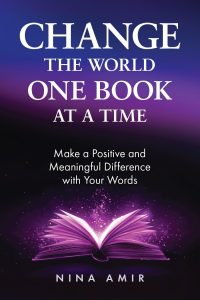 Books can inspire and motivate readers to new action. However, this only happens if the author initially crafts a manuscript that prompts readers to choose something different.
Whether you want to change individual lives or transform organizations, communities, governments, the environment, or the world, you can learn to “author change.” You can write a book that causes readers to join your specific movement, mission, or cause.
“Authors of Change” write nonfiction, fiction, and memoir. No matter the genre you choose, there are ways you can make your writing more inspiring and motivational. Let’s explore some tools and tactics proven to help authors make a positive and meaningful difference with their words.
- Learn to write for change.
Research how change agents get people to do things differently or to join a cause or movement. Study the art of influence and persuasion, or master personal growth techniques, sales tactics, or habit-formation strategies.
- Model Transformational Books
Research books that started movements, supported a cause, or moved large numbers of people to take a specific action. Determine how these authors inspired and motivated readers to action. Analyze how they wrote their books and identify similarities in their book organization.
Also, study the books you would categorize as “competition.” What did these authors do that helped them become influential enough with their readers to get them to take action?
- Include Research, Data, and Persuasive Arguments
Everyone—including you— is an expert, influencer, or authority on something. Therefore, you can’t write for change. However, research, data, and persuasive arguments give credence to your requests for change.
These days, finding research and data to support a cause is easy. You can find studies on Google or ask ChatGPT for recent data. Then, check those sources and include what you find relevant. Or interview experts, which makes you an expert by default.
- Feature Your Expert Status, Authority, or Experience
If you do have expert status, authority, or even experience in the change you want to write about, be sure to feature that in your bio as well as in the book. Use personal stories; write about your experience. Also, share the successes of your clients or of groups that have implemented the change you recommend.
Readers are more likely to act on your recommendations if they know there is a sound basis for your point of view. Explain why you are the best person to write your book and give them reasons to believe in you and your advice.
- Demonstrate your Passion and Purpose
 You have a passion for your cause, movement, or mission. You feel a sense of calling or purpose for creating change. Let your readers feel your passion and purpose.
When you demonstrate passion and purpose, your readers get inspired. Spark their passion. Ignite their purpose. They will then feel inspired to take action.
- Use Persuasive Language Patterns
Use NLP (neuro-linguistic programming) language patterns in your writing. There are many NLP persuasive language patterns; with a little knowledge, you can begin using them to move your readers toward change. The best copywriters use NLP language patterns in their work, which gets readers to take action and purchase products.
- Create Contrast
Help your reader feel the pain of not changing. You can remind them, “You are here but want to be there,” or “If you remain the same, you’ll get this result; if you change, you’ll get this more desirable result.” Show them the choices, opportunities, and possibilities available. Raise their ambitions for a better future, but also help them see the deficits of the present.
- Demonstrate Understanding
Tell stories that show you have been where they are and understand what it is like. Let readers know you understand that change is hard… but it is achievable. Ensure you also demonstrate that you found a way to get where they want to go. Then tell them how to do the same.
- Offer a clear plan
If you are writing nonfiction, include specific steps or ways to accomplish change. This helps readers believe they can do it, thereby reducing resistance. If you are writing fiction or memoir, craft your story around the steps characters take that result in transformation.
- Paint a picture
Use your words to create clear pictures of change and its positive impact. Use analogies, metaphors, allegories, and descriptive language to emphasize the benefits of doing something different. Ask readers to imagine or visualize life after transformation. Metaphor is often used by writers who understand NLP. Also, pictures generate emotions, which helps people want to change.
- Make the Reader the Hero
Use the Hero’s Journey as the foundation of your story. This narrative story template involves a hero who goes on an adventure, meets a guide, learns a lesson, wins a victory, and returns home transformed. Demonstrate how readers can be heroes. Be their guide. Even a nonfiction writer can apply this template by instilling in readers the belief that they can make a difference.
- Share Your Story and Message
When readers know who you are and why you want them to change, you increase the chances they will feel inspired and motivated to change. So, tell your story and share your message.
And share your mission. Be clear about why you wrote the book—why you want to inspire and motivate change. Share your purpose.
You can use your words to make a positive and meaningful difference in the world—if you know how to write in a way that inspires and motivates readers to take new action. Each reader who joins your mission, movement, or cause creates a ripple effect in the world.
Do you plan to write for change? Tell me in a comment below.
About the Author
Nina Amir, the Inspiration to Creation Coach, is an Amazon bestselling hybrid author. She supports writers on the journey to successful authorship as an Author Coach, nonfiction developmental editor, Transformational Coach, and Certified High Performance Coach (CHPC®)—the only one working with writers.
Nina’s most recent book, Change the World One Book at a Time: Make a Positive and Meaningful Difference with Your Words, was released on January 6, 2026, by Books that Save Lives. Previously, she wrote three traditionally published books for aspiring authors—How to Blog a Book, The Author Training Manual, and Creative Visualization for Writers. Additionally, she has self-published a host of books and ebooks, including the Write Nonfiction NOW! series of guides. She has had 19 books on the Amazon Top 100 List and as many as six books on the Authorship bestseller list at the same time.
Nina also coordinates the SFWC’s Personal Growth for Writers track and the Writing for Change Summit. She also offers a conference scholarship for nonfiction writers writing for change.
Discover more about Nina at https://ninaamir.com and find all her books at https://booksbyninaamir.com.
@@@
Editor’s Note: Caitlin Forbes offers a unique perspective worth exploring in your own writing in this article. Everything I highlighted in red is a subject worth exploring in your stories, essays, and journals.
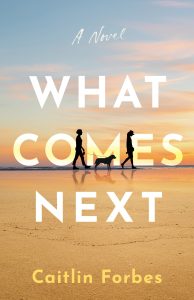
Want a great sample of how this works? Read her novel, What Comes Next. Her bio follows our review.
The question of inheritance – of what we inherit versus what we get to choose
By Caitlin Forbes
 When I was in high school, I read John Steinbeck’s East of Eden and I was fascinated by its take on free will. I won’t summarize the novel, but it has this focus on the biblical word “Timshel”, which could be translated as ‘thou mayest’ or ‘thou shalt’ (i.e., thou must).
In other words, in one translation, we are forced to be one way. In the other, we got to choose.
As a sixteen year old, I, unsurprisingly, loved the idea of choice—where it was up to me to choose my own destiny, to define my own future. It was an empowering and hopeful way to view the world.
I’m not sixteen anymore, but the question of agency has stayed with me; and the older I get, the far more complex it has become. Because yes, we do have a choice… but there’s also everything that sits behind those choices: the childhood experiences that shape us, the people who make us feel valued (or not), the genes that affect our physical and mental health, and the list goes on… all these different factors that make us who we are and predispose us to make certain decisions.
We see it in novels all the time. Characters who struggle to offer kindness because they’ve never experienced kindness themselves. Characters who suffer from jealousy and fear because they never felt valued. Complex, flawed and deeply human characters who remind us that a simple choice for one person may look very different for another. That the lines between good and bad, and right and wrong, are incredibly shaky—because we are all starting from different places… doing the best we can with what we’ve been given.
This balance is what I tried to dig into with What Comes Next, where you have Alex and Meredith, two very different sisters, dealing directly with inheritance—both a faulty gene and family trauma—and having to decide how to move forward. Should they get tested for a genetic condition? Should they pursue love in the face of an uncertain future? Should they fight for what they want or learn to accept what they’ve been given?
They each make different decisions because they each are starting from a different set of experiences. An easy choice for Meredith is a difficult one for Alex—and while Alex’s hesitation can be frustrating, it also points to the beauty of remembering that choices don’t sit in a bubble. Because when you take a step back, and look at Alex’s full story… at all the things she had to overcome just to stumble the smallest step forward… well, then, suddenly there is so much more to celebrate.
And ultimately, that’s really what I love about agency and inheritance and how tightly the two are wrapped together. Because once we stop judging people based on our own experiences and instead see the depth of theirs… well, we start seeing how incredibly resilient people are. We start seeing just how much hope sits behind every decision, even the smallest ones.
@@@
Caitlin Forbes was born in Rhode Island and grew up in the mountains of western Maine. She received her bachelor’s degree from Saint Anselm College in New Hampshire and her master’s degree in English literature from the University of Connecticut. She has a decade’s worth of experience working as a leader in healthcare technology and transformation. Forbes lives in Saco, Maine, with her husband, son, and one-hundred-pound Shiloh shepherd.
 @@@
@@@
Here’s a way to jump-start your writing this January:
Write about what surrounds you or a memory. There are many ways to do this, of course, but it might be fun to start with a sound. Here are some ideas to get you started:
Write about:
- the horns of New Years
- the sounds of the Superbowl
- rain on the rooftop or car windshield
- a winter concert
- the sounds of a forest blanketed with snow
- the sounds of a shopping mall filled with customers
- the slosh of boots in rain or snow
- the sounds of a holiday toy reverberating in your house or your memory
- the sounds of gravy bubbling on the stove
- the sounds you create when tinkering with an engine in a cold garage
- the sounds of spam callers who won’t take you off their list
- the sound of a siren on the street where you live
 Start by describing the sound and how it makes the narrator feel. Go wherever the writing takes you—poem, essay, story, sci fi, romance, women’s fiction, blurt, blog, multi genre, play…. You make the call.
PLEASE NOTE: A new article will be posted on January 9. It’s by Caitlin Forbes who’s participating in one of WOW: Women on Writing’s blog tours.

