
Ideas and tips for writing Flash Fiction.
“I believe a compelling flash story works best when it uses compression, narrative, language, imagery, details specific to its story and character(s) that aren’t interchangeable with others, and rhythm.” ~~Andrea Marcusa
The Form Intrigued Me
An Interview with writer Andrea Marcusa
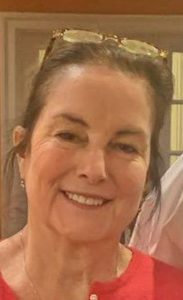
Andrea Marcusa began her career as a writer for Glamour and Mademoiselle magazines where, fresh out of college, she received her first national byline for a personal essay chronicling the ups and downs of a long distance romance. She’s written about falling in love, marriage, motherhood, siblings, parents, and learning to drive a pickup truck. Her work has appeared in national newspapers including The New York Times, The Christian Science Monitor as well as Glamour and Mademoiselle magazines.
Her literary fiction and essays have appeared in The Gettysburg Review, River Styx, Citron Review, The Baltimore Review, and others. She’s received recognition for her writing in a range of competitions, including Glimmer Train, Third Coast, The Raleigh Review, Southampton Review (fiction) , New Letters (essay) and Citron Review (micro fiction). Since 2014, she has been nominated yearly for Pushcart Prizes.
Here are her ideas and tips for writing Flash Fiction.
BLG: Tell us about your writing background. When did you know you wanted to be a writer and when were you first published?
AM: I wrote my first story in the first grade about neighborhood dogs howling all night long and keeping me awake. My teacher loved the story and from there, my writing took off . I read books, told stories and wrote them. In college I wrote for our newspaper and when I graduated, I landed a job at the now defunct Mademoiselle Magazine, in New York City, where I received my first byline for a personal essay about a long-distance romance.
After Mademoiselle, I worked for several magazines, including Glamour where I was a staff writer. Within a few years, I wanted to expand my skills and bank account and so began working in marketing communications, where I wrote ad copy, press releases, speeches, and annual reports in a range of fields from fashion to food to health to medicine. During this time, I constantly felt pulled towards more creative writing and at some point began taking evening workshops in New York City for personal essays and memoir.
Soon I was publishing my essays in the New York Times, the Christian Science Monitor, Long Island’s newspaper, Newsday and others. At some point, I expanded beyond CNF into fictional narratives and began writing short stories.
BLG: How did you develop an interest in flash fiction?
AM: After several years, publishing long stories in some highly respected literary magazines, I discovered flash fiction. The form intrigued me. How a fine flash could leave a reader deeply emotionally moved. I was amazed that it could be achieved with so few words. Although I had written stories up to twenty-five pages long, I’ve always preferred the short form. Most of my professional writing career had been writing short pieces, from fashion copy to brief bios, to captions to press releases and I was comfortable writing clear and concise work that covered lots of ground. Plus, I felt the public’s reading tastes were moving in this direction too, so I immersed myself in Flash Fiction.
BLG: Why does it seem particularly appropriate for our times?
AM: We are constantly being pulled in many directions as we are bombarded with messages — on elevators, at bus stops, social media, even news stories. Lots has been reported about the publics decreasing attention span. Therefore flash fiction is a perfect literary form for our times.
BLG: What makes a flash fiction story work?
AM: That is a difficult question to answer. I believe a compelling flash story works best when it uses compression, narrative, language, imagery, details specific to its story and character(s) that aren’t interchangeable with others, and rhythm. The emotional tone of the story must move. We must feel that the story does not end on the same emotional note that it began with.
BLG: How do you come up with such good endings?
AM: Thank you for saying that I came up with good endings! Most of my best endings either bubble up sort of unconsciously while I’m writing, or when I’ve finished a story, and not happy with the ending, I may be taking a walk and a new ending will appear in my mind like a lightning flash. I don’t think through the endings I allow them to show up from clues in the writing — an image, a sound, a rhythm.
BLG: How do you market flash fiction?
AM: I don’t consider myself a great marketer. I read flash collections and novels in flash and flash publications constantly. If the work of a writer reminds me of mine, I look to see where else they have been published and make note of these publications. I also look at the “best of” annual collections for ideas. Then I look up each publication that I’m interested in, read a few issues, and if they seem like a good fit, I’ll send out a piece. I don’t believe in trying to write for a specific publication. For instance, I will never be a funny writer, so I would never try to write for a publication interested in humor. The same for magical realism or surrealism.
BLG: How did you find Bottlecap Press?
AM: I was very new to the book publishing process. I went to many online readings and collected flash books from authors I respected and created a list of targets. Then I sent my manuscript to the ones that made sense. Bottlecap was the first publication that responded, in fact, quite quickly. I asked several writers whose opinions I respect and who had published flash collections and they said they thought it was a good publisher. So I went with it.
BLG: What advice do you have for those struggling to improve their flash fiction?
AM: Read flash. Take workshops. Map out what an author is doing in a narrative and try to match the cadence to beats of your own story. Pay attention to language. Avoid cliches. Be imaginative. Be patient!
BLG: What else would you like us to know and where can we learn more about you?
AM: Interested readers can visit my website:andreamarcusa.com, where many of my pieces are available to read.


Leave a Reply